
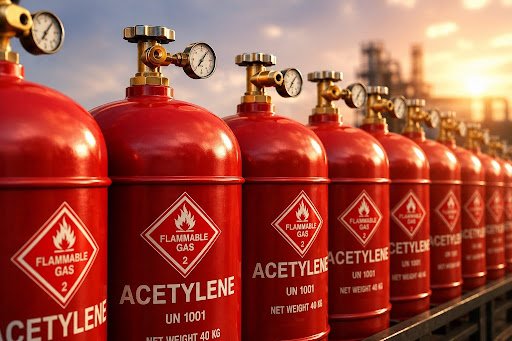
The use of Acetylene gas is common across various industries, particularly in welding, metal cutting, and chemical synthesis. Given its highly flammable nature, understanding the safe practices for handling and storing acetylene is crucial to prevent accidents and ensure safety in the workplace.
Understanding Acetylene Gas
Acetylene is a colourless gas that, when burned with oxygen, produces a flame capable of reaching temperatures around 3,500 degrees Celsius. This makes it a popular choice for welding and cutting metals. However, because it is highly volatile, proper handling and precautions are necessary to prevent incidents such as explosions or fires.
Proper Storage of Acetylene Cylinders
One of the key safety measures involves the correct storage of acetylene cylinders. Cylinders should be stored upright, in a well-ventilated area away from sources of heat and ignition. It’s important to store them away from corrosive substances and to regularly check for signs of leaks or damage. The storage area must be legally compliant with safety regulations to ensure comprehensive risk management.
Handling Procedures
When handling acetylene, personal protective equipment (PPE) such as gloves, goggles, and protective clothing should be worn to prevent injuries. During transportation, cylinders should be secured in an upright position and protected from external impact. Equally, proper training for handling acetylene significantly mitigates risks associated with its use.
Using Equipment Safely
Before using acetylene, ensure that all equipment is suitable for use with acetylene gas and is in good condition. Regular maintenance checks and using fittings designed specifically for acetylene can significantly reduce the risk of gas leaks. Equipment should only be operated by individuals who have been thoroughly trained and are aware of the potential risks.
Emergency Procedures
Preparation for potential emergencies is a vital aspect of using acetylene safely. Fire extinguishers and emergency shut-off devices should be readily accessible. It’s essential to have a comprehensive plan that includes evacuation procedures and medical responses in the event of exposure to acetylene gas.
Detecting and Managing Leaks
Acetylene leaks can pose significant hazards. Regularly inspecting joints and connections on cylinders and equipment can help in early detection of leaks. Using soapy water to wash connections is a simple yet effective method to identify leakages, indicated by bubbles forming at the leak site.
Fire Prevention Strategies
To prevent fires, avoid smoking or using any sources of ignition near acetylene cylinders. Ventilation is also critical, as it reduces the concentration of gas in the air, minimizing the chances of spontaneous ignition. Make sure that all pipes and hoses are well-maintained and appropriate for acetylene use.
Safe Disposal of Gas
Disposing of acetylene involves following specific protocols to ensure safety and environmental compliance. Cylinders should be returned to suppliers like Coregas for safe disposal or refilling. Refrain from disposing of acetylene or its containers in general waste.
Training and Certification
Implementing an effective training program is essential for those using or handling acetylene gas. Certification courses provide hands-on training and teach best practices for maintaining safety while working with acetylene. Tutors cover a range of topics, including equipment handling, storage protocols, and emergency response.
Regulatory Compliance
Complying with industry regulations is non-negotiable for businesses that use acetylene. Adhering to safety guidelines set by occupational health and safety administrations ensures not only compliance but also the well-being of personnel working with this gas.
Understanding Risk Management
Effective risk management strategies are necessary when working with acetylene. Perform risk assessments regularly and put controls in place to mitigate identified risks. Documentation of safety procedures is crucial to reinforce safe practices.
Partnering with Trusted Suppliers
Working with trusted suppliers for acetylene and other welding gases ensures the quality and safety of the gas provided. Suppliers like Coregas offer professional guidance and support for handling and storing gases safely, providing peace of mind and enhancing workplace safety.
Technical Advances in Safe Handling
Advancements in technology have introduced automatic gas monitoring systems that further ensure safety by detecting leaks early and shutting down gas supply before incidents occur. Implementing these technologies can greatly improve safety standards in facilities that use acetylene.
Concluding Remarks
Adhering to safe practices when using acetylene gas cannot be overstated. From storage to usage, each step requires careful attention to regulations and best practices to ensure the safety and efficiency of operations. Businesses and individuals alike must remain vigilant and proactive in maintaining a safe environment when working with acetylene.
