
In the aviation industry, food service plays a vital role in shaping passenger experience. Whether it’s a luxury traveler on a private jet or a passenger on a commercial airline, the quality, presentation, and personalization of meals can significantly impact satisfaction. However, there is a stark contrast between catering private jets and catering for commercial flights. Both fall under the umbrella of inflight catering services, yet they differ greatly in terms of customization, scale, quality, logistics, and overall passenger expectations.
This article explores the key differences between these two catering segments and highlights why private jet catering is considered a premium, highly specialized service.
1. Level of Personalization
One of the most significant differences between catering private jets and commercial airline catering lies in personalization.
Private jet catering is entirely customized to meet the preferences of individual passengers. Clients can request specific cuisines, dietary requirements, or even meals from their favorite restaurants. Whether it’s vegan, keto, gluten-free, or a multi-course gourmet meal, everything is tailored to the passenger’s taste.
In contrast, commercial inflight catering services operate on a standardized model. Meals are pre-designed and produced in bulk, with limited options such as vegetarian or non-vegetarian. While some airlines offer special meal requests, these are still restricted within predefined menus.
Key takeaway: Private jet catering prioritizes individuality, while commercial catering focuses on efficiency and uniformity.
2. Quality and Presentation
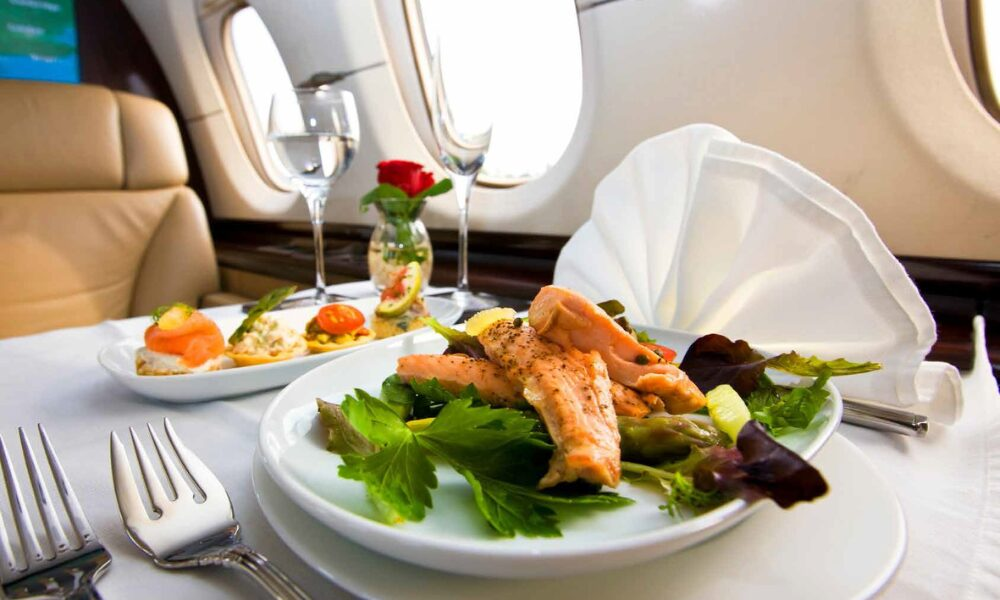
When it comes to quality, catering private jets is often compared to fine dining experiences. Meals are prepared using premium ingredients, often sourced fresh and locally. Presentation is equally important, with food plated elegantly using high-end tableware.
On the other hand, commercial airline meals are designed for mass production and long shelf life. Food is typically prepared in centralized kitchens, chilled, and reheated onboard. While airlines have improved their offerings over time, they still cannot match the freshness and sophistication of private jet meals.
Key takeaway: Private jet catering emphasizes gourmet quality and aesthetic presentation, whereas commercial catering prioritizes practicality and consistency.
3. Flexibility and Timing
Flexibility is another major differentiator. Catering private jets allows last-minute changes, whether it’s a menu adjustment or a specific ingredient request. Since private flights operate on flexible schedules, catering providers must be agile and responsive.
Commercial flights, however, operate on strict schedules and logistics. Meals are prepared hours in advance and loaded according to flight plans. Once the catering is finalized, making changes is nearly impossible.
Key takeaway: Private jet catering offers unmatched flexibility, while commercial catering follows rigid operational timelines.
4. Scale of Operations
The scale at which inflight catering services operate varies dramatically between private and commercial aviation.
Private jet catering deals with a small number of passengers—often just a handful. This allows chefs and catering teams to focus on detail, quality, and customization.
Commercial airlines, however, cater to hundreds of passengers on a single flight. This requires large-scale production facilities, standardized processes, and strict quality control measures to ensure consistency across all meals.
Key takeaway: Private jet catering is boutique and detail-oriented, while commercial catering is industrial and volume-driven.
5. Menu Variety
With catering private jets, the menu possibilities are virtually limitless. Passengers can enjoy international cuisines, gourmet delicacies, and even personalized dishes crafted by top chefs. Seasonal ingredients and unique culinary experiences are often incorporated.
Commercial airlines, on the other hand, offer limited menu options due to logistical constraints. Meals are designed to appeal to a broad audience and must be suitable for reheating and serving in-flight.
Key takeaway: Private jet catering offers extensive variety, while commercial catering provides limited, standardized choices.
6. Service Experience
The service experience is another area where differences are evident. In private aviation, meals are served by dedicated cabin crew who focus on delivering a personalized dining experience. Passengers can choose when and how they want their meals served.
In commercial flights, service is structured and time-bound. Cabin crew must serve all passengers efficiently, leaving little room for personalized attention.
Key takeaway: Private jet catering delivers a luxury dining experience, while commercial catering focuses on efficiency and speed.
7. Cost Differences
It’s no surprise that catering private jets is significantly more expensive than commercial airline catering. The cost reflects the premium ingredients, customization, and personalized service involved.
Commercial inflight catering services, on the other hand, are designed to be cost-effective. Airlines must balance quality with affordability to remain competitive, which often results in standardized meals.
Key takeaway: Private jet catering is a premium service with higher costs, while commercial catering is budget-conscious and scalable.
8. Logistics and Supply Chain
The logistics behind inflight catering services also differ greatly. Private jet catering often involves sourcing ingredients from specialized suppliers, coordinating with luxury restaurants, and ensuring timely delivery to private terminals.
Commercial airline catering relies on large-scale kitchens located near airports. These facilities handle thousands of meals daily, ensuring they meet strict safety and regulatory standards.
Key takeaway: Private jet catering uses a flexible, high-end supply chain, while commercial catering depends on large, centralized operations.
9. Dietary and Special Requirements
While both sectors accommodate dietary needs, catering private jets excels in this area. Passengers can request highly specific dietary plans, including medical or lifestyle-based requirements, with complete assurance of quality and accuracy.
Commercial airlines do offer special meals, but options are limited and must be requested in advance. The level of customization is far less detailed compared to private aviation.
Key takeaway: Private jet catering provides comprehensive dietary customization, while commercial catering offers limited special meal options.
10. Innovation and Trends
Private jet catering is often at the forefront of culinary innovation. From molecular gastronomy to organic and farm-to-table concepts, the focus is on delivering unique and memorable dining experiences.
Commercial inflight catering services are gradually evolving, incorporating healthier options and improved recipes. However, innovation is often constrained by scalability and cost considerations.
Key takeaway: Private jet catering leads in innovation, while commercial catering adopts trends more cautiously.
Conclusion
The differences between catering private jets and commercial airline catering highlight the contrasting priorities of luxury versus scalability. Private jet catering is all about personalization, quality, and exclusivity, offering passengers a bespoke dining experience that rivals top restaurants. In contrast, commercial inflight catering services focus on efficiency, consistency, and cost-effectiveness to serve large numbers of passengers.
Both models serve their purpose within the aviation industry, but they cater to entirely different audiences and expectations. As the demand for luxury travel continues to grow, the standards for private jet catering will only rise, setting new benchmarks for excellence in inflight dining.