
Product photography has always been one of the most expensive, time-consuming, and logistically complicated parts of running an online store. A single studio shoot for a mid-sized catalog — booking the photographer, renting the space, sourcing props, hiring a model, managing retakes — can easily run $2,000 to $5,000 and take two to three weeks from brief to final delivery.
Then the season changes. Or the product gets a packaging update. Or the marketing team needs a lifestyle shot for a flash sale that wasn’t in the original brief.
This is the operational reality that’s pushing a growing number of e-commerce brands toward AI product image generators — not as an experiment, but as a core part of their visual production workflow.
What Is an AI Product Image Generator and Why Is It Gaining Serious Traction?
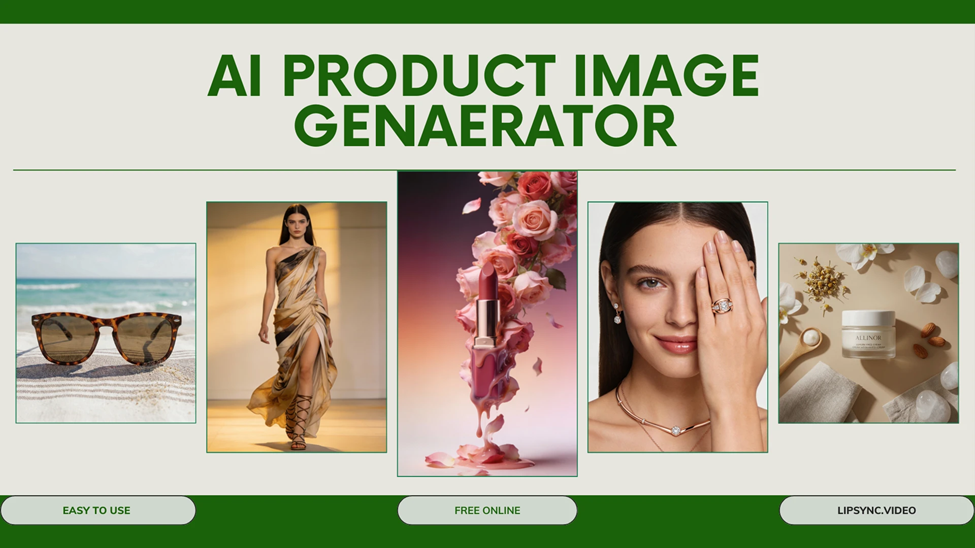
An AI product image generator takes a product photo — often a simple, unadorned shot against a plain background — and transforms it into a polished, contextually appropriate visual. That might mean placing the product in a lifestyle setting, generating a model interacting with it, creating a themed seasonal backdrop, or producing consistent multi-angle shots from a single source image.
The technology combines image segmentation (isolating the product from its background), generative scene synthesis (creating a realistic environment around it), and style consistency modeling (maintaining coherent lighting, shadow, and color treatment across multiple outputs). The practical result: a brand can produce what would previously have required multiple studio sessions from a single upload and a text prompt.
What’s changed in the last eighteen months isn’t that the technology exists — early versions of AI image tools have been available for years. What’s changed is the quality threshold. Current-generation tools produce results that are genuinely competitive with mid-tier commercial photography, which is the category most small and mid-sized e-commerce brands are actually buying.
Real E-Commerce Scenarios Where AI Product Photography Delivers
Launching a New Product Without a Full Shoot Budget
Early-stage brands and independent sellers face a consistent tension: they need professional visuals to compete on marketplaces like Amazon, Shopify, or Etsy, but they don’t yet have the revenue to justify professional shoot budgets for unproven SKUs.
An AI product image generator changes the economics of this decision entirely. A founder can upload a smartphone photo of their product, describe the scene they want — “white marble surface, minimalist kitchen setting, soft natural light from the left” — and generate a set of polished images in minutes. If the product gains traction, they invest in professional photography. If it doesn’t, they haven’t committed four figures to a shoot that never pays off.
This isn’t a compromise on quality for early-stage brands — it’s a rational allocation of capital at a stage where validation matters more than perfection.
Seasonal and Campaign Visuals Without Reshoots
This is where the ROI case for established brands becomes clearest. A brand with a stable product catalog still needs fresh visuals for every seasonal campaign: holiday packaging context, summer lifestyle shots, back-to-school themes, Valentine’s Day settings. Traditionally, each of those requires either a new shoot or an expensive retouching pass on existing assets.
With an AI product image generator, a marketing team can describe the campaign context — “holiday special, warm candlelight, gift wrapping props, dark moody background” — and generate themed versions of existing product photography instantly. The core product image stays consistent; the scene changes around it.
One Shopify seller managing a candle brand reported cutting their seasonal content production time from three weeks to three days after integrating AI product photography into their workflow — without reducing the number of visual variants they produced for each campaign.
Multi-Angle Coverage From a Single Source Image
Product listings with multiple viewing angles consistently outperform single-image listings across every major e-commerce platform. Amazon’s own seller data has long indicated that listings with six or more images see meaningfully higher conversion rates than those with one or two. The problem is that generating those angles traditionally requires either setting up multiple shots during a studio session or expensive CGI rendering.
AI product image generation addresses this directly. Upload a front-facing product image, describe the angle needed — side profile, close-up detail, overhead flat lay — and the system generates a consistent visual that matches the lighting and style of the original. The product stays recognizable; the perspective changes.
Lifestyle Shots With AI Models
Lifestyle imagery — showing a product in use, worn by a person, or integrated into a real environment — converts better than isolated product shots for most categories. Apparel, accessories, home goods, personal care, and fitness products all benefit from the context that lifestyle photography provides.
But lifestyle shoots are the most expensive and logistically complex part of the photography process. Booking models, coordinating wardrobe, managing location permits — all of it compounds the time and cost.
LipSync Video’s AI product photo generator allows brands to describe the model and scene entirely through a prompt: age range, style, setting, how the product is being used. The system generates a realistic lifestyle scene built around the actual product image, without any model booking or location coordination required.
How to Get the Best Results From AI Product Image Generation
Start With a Clean Source Image
The quality of your output is constrained by the quality of your input. A well-lit product photo against a clean background — even a plain white wall — gives the AI clear information about the product’s shape, texture, and material properties. Cluttered or poorly lit source images produce less accurate results because the segmentation layer has less clean data to work with.
You don’t need a professional camera. A modern smartphone in good natural light, with the product placed against a neutral background, produces a source image that AI tools can work with effectively.
Be Specific in Your Prompts
Vague prompts produce generic results. “Lifestyle setting” gives the system very little to work with. “Outdoor patio, late afternoon golden hour light, wooden table, green plants in the background, product centered” gives it the information it needs to generate something specific and usable.
The more contextual detail you include — surface material, lighting quality, time of day, props, color palette — the more the output will match your creative intent. Treat the prompt like a brief you’d give a photographer, not a search query.
Generate Multiple Variants and Select
AI generation isn’t deterministic — the same prompt can produce meaningfully different results across multiple runs. Best practice is to generate three to five variants of each shot and select the strongest, rather than accepting the first output. The time cost of generating multiple variants is negligible compared to the selection value.
Maintain Consistency Across a Catalog
For brands managing multiple SKUs, visual consistency across the catalog matters as much as the quality of individual images. Use consistent prompt language for scene and lighting across products — if you’re using “soft diffused studio light, light gray background” for one product, use the same language across the line. This produces a cohesive visual identity that reads as deliberate and professional rather than piecemeal.
The Broader Shift in E-Commerce Visual Production
The adoption of AI product image generation isn’t a story about technology replacing photographers. Professional photography retains real value for hero imagery, brand campaigns, and premium catalog work. The shift is about what happens to everything else — the long tail of product variants, seasonal refreshes, marketplace listings, and campaign assets that need to be produced quickly and economically.
For most e-commerce teams, that long tail represents the majority of their visual production volume. AI product photography tools address exactly that problem: high volume, fast turnaround, consistent quality, at a cost structure that scales with the business rather than against it.
The brands that figure out how to integrate these tools into their production workflow now will have a meaningful operational advantage as the tools continue to improve.