
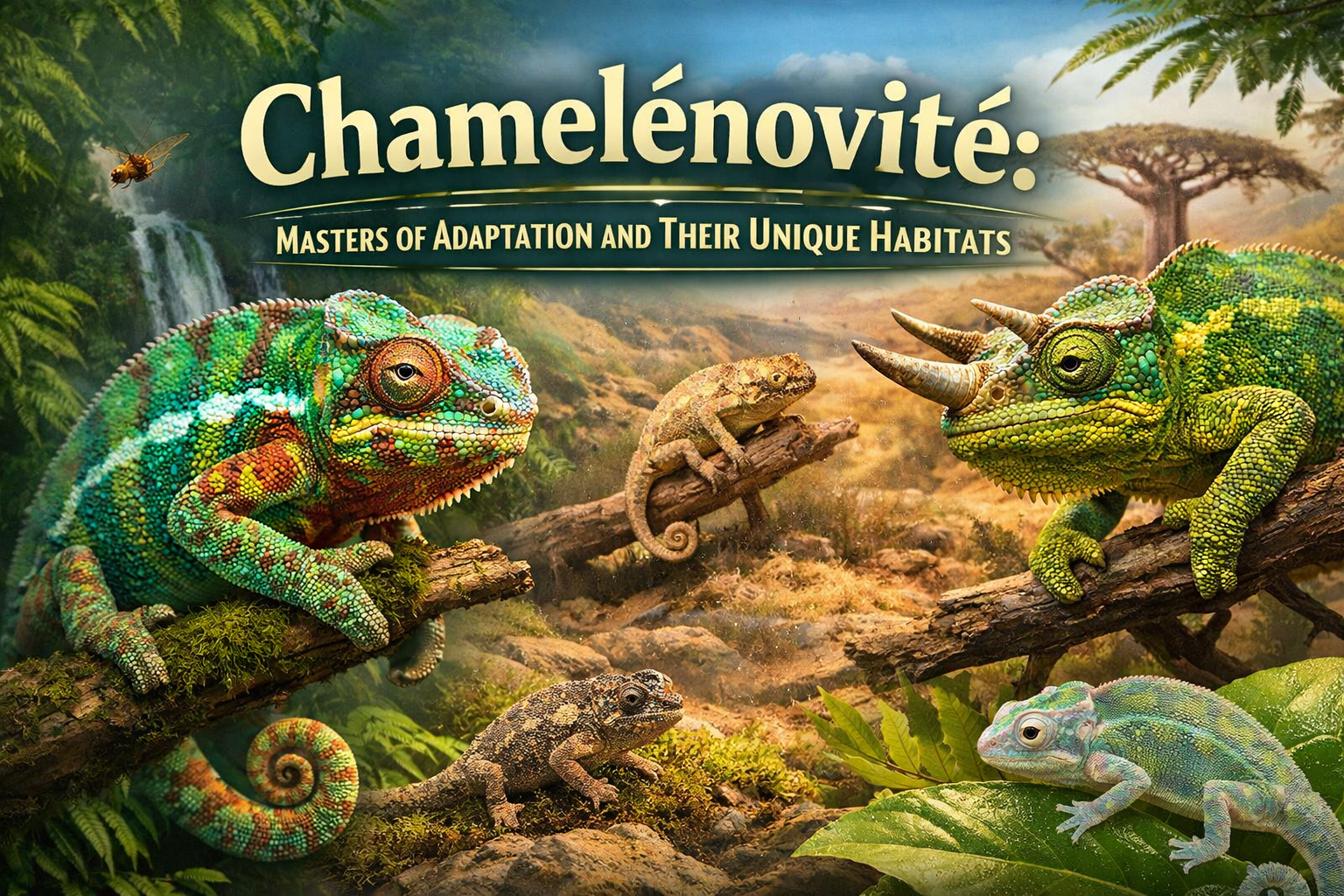
Chameleónovité is the scientific family of chameleons, a group of reptiles known for their ability to change color, move their eyes independently, and live mainly in trees. These animals are found mostly in Africa and Madagascar. They use color change for communication, temperature control, and survival. With special feet, long tongues, and strong tails, chameleons are skilled hunters and climbers. They play an important role in nature by controlling insect populations and supporting ecosystem balance.
Introduction
Chameleónovité is one of the most fascinating groups of reptiles in the world. These animals attract attention because of their color-changing skin and unique body features. However, there is much more to them than what people usually see.
In this guide, you will learn everything about chameleónovité in a clear and simple way. From how they live to why they matter, this article gives you a full understanding.
What Does Chameleónovité Mean?
Chameleónovité is the scientific name for the family of chameleons. Scientists use this name to group all species that share similar traits.
This family belongs to the reptile group called Squamata, which also includes snakes and other lizards. There are more than 150 known species of chameleons, and each one has its own size, color, and behavior.
Main Features of Chameleónovité
Chameleons have many special features that make them different from other reptiles. Let’s look at the most important ones.
Color Changing Skin
Many people believe chameleons change color only to hide. In reality, they use color change for many reasons.
They change color to:
- Show emotions like stress or calmness
- Communicate with other chameleons
- Control their body temperature
Their skin contains tiny structures that reflect light, which creates different colors.
Eyes That Move Separately
Chameleons have very unique eyes. Each eye can move on its own.
This helps them:
- Watch for danger
- Search for food at the same time
Because of this ability, they can see almost everything around them without moving their body.
Long and Fast Tongue
A chameleon uses its tongue to catch prey. The tongue is:
- Very long
- Extremely fast
- Sticky at the end
It can shoot out quickly and grab insects in a fraction of a second. This allows the chameleon to hunt while staying still.
Strong Gripping Feet
Chameleons spend most of their time in trees. Their feet are designed to hold branches tightly.
Their toes are grouped in a way that works like a clamp. This gives them a strong grip and helps them move safely.
Tail That Acts Like a Hand
Many chameleons have a tail that can wrap around branches. This type of tail is called a prehensile tail.
It helps them:
- Balance their body
- Stay stable while climbing
Where Do Chameleons Live?
Chameleónovité species mostly live in warm regions of the world. The largest number of species can be found in Africa and Madagascar.
Here is a simple overview:
| Location | Details |
|---|---|
| Africa | Home to most species |
| Madagascar | Very high diversity |
| Asia | Some species in India and nearby areas |
| Southern Europe | A few rare species |
Chameleons prefer places like forests, bushes, and trees. Some species can also live in dry areas.
Behavior and Daily Life
Chameleons live a calm and quiet life. They move slowly and carefully. Often, they sway like leaves in the wind to avoid being noticed.
They are usually:
- Active during the day
- Living alone
- Protective of their space
When they meet another chameleon, they may change color quickly. This shows whether they feel strong or threatened.
What Do Chameleons Eat?
Chameleónovité species are mostly insect eaters.
Their diet includes:
- Flies
- Crickets
- Grasshoppers
- Other small insects
Some larger species can also eat small birds or reptiles.
They usually wait quietly for prey and then strike quickly with their tongue.
Reproduction and Life Cycle
Chameleons reproduce in two main ways. Most species lay eggs, while some give birth to live young.
Important points:
- Females lay eggs in soil
- Eggs develop without parental care
- Babies start hunting soon after birth
The life cycle depends on the species and environment.
Why Chameleónovité Matter in Nature
Chameleons play an important role in the ecosystem.
They help control insect populations, which keeps the environment balanced. Without them, insect numbers could increase and cause problems for plants and crops.
They also serve as prey for other animals, which supports the food chain.
Common Misunderstandings
Many people have wrong ideas about chameleons. Let’s clear them up.
| Myth | Reality |
|---|---|
| They can match any background | They change color mainly for communication |
| They are slow and weak | They are skilled hunters |
| They like living in groups | They prefer living alone |
Understanding the truth helps people respect these animals more.
Threats and Conservation
Many species in the chameleónovité family face danger today.
The main threats include:
- Loss of natural habitat
- Cutting of forests
- Illegal pet trade
Some species are now at risk of extinction. Protecting their environment is very important for their survival.
Final Thoughts
Chameleónovité is a truly unique family of reptiles. These animals are not only beautiful but also highly adapted to their environment.
From their color-changing skin to their powerful hunting skills, every feature helps them survive in nature.
When you understand how chameleons live and why they are important, you begin to see their true value. Protecting them means protecting the balance of nature itself.
Read More: Yalla Choy