
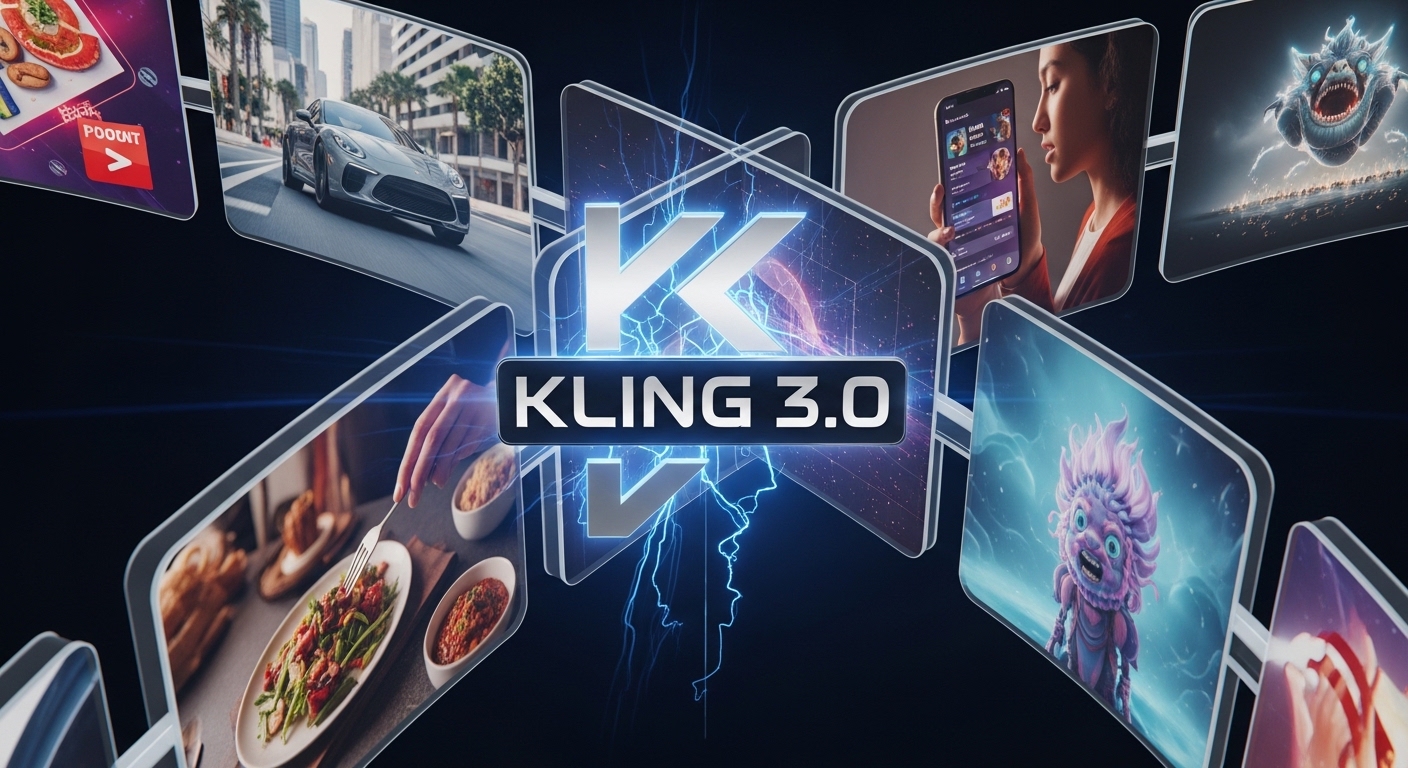
The evolution of AI-driven video creation has reached a point where realism, narrative flow, and production value are no longer reserved for large studios. Advanced video generation systems are now capable of producing cinematic visuals, synchronized sound, and multi-shot sequences that closely resemble professionally directed ads. For marketers, this shift signals a new phase where speed, quality, and creative control can coexist.
In this rapidly changing landscape, kling 3.0 represents a major leap forward in how AI-generated video can be used for advertising. With its ability to produce short, cinematic clips that maintain visual consistency and integrate audio natively, it aligns closely with the needs of modern performance marketing. Its availability within platforms like invideo also reflects how advanced AI video tools are becoming more accessible to marketing teams without turning the process into a highly technical workflow.
As attention spans shrink and visual standards rise across digital channels, advertisers are under pressure to deliver high-quality video content at scale. Understanding what kling 3.0 enables—and how it reshapes creative possibilities—is essential for brands aiming to stay competitive in AI-powered advertising.
The Growing Demand for Cinematic Quality in Digital Ads
Why Visual Quality Now Determines Ad Performance
Audiences today are exposed to thousands of ads every day. Static visuals and low-effort videos often fail to capture attention beyond the first few seconds. High-quality motion, realistic lighting, and natural camera movement now play a significant role in determining whether an ad is watched, skipped, or remembered.
Cinematic visuals help ads stand out by creating emotional depth. Smooth transitions, depth-of-field effects, and realistic character movement subconsciously signal credibility and professionalism. These qualities are no longer exclusive to high-budget productions, thanks to advancements in AI video generation.
Short-Form Video and the Pressure to Deliver More
Short-form platforms have changed how ads are consumed. Brands are expected to release frequent video creatives tailored to different audiences, formats, and messaging angles. Producing this volume traditionally requires extensive resources, which is where AI-generated video becomes particularly valuable.
Instead of choosing between speed and quality, marketers are now exploring tools that can deliver both—without compromising brand consistency or storytelling.
How Kling 3.0 Redefines AI Video Advertising
From Basic Generation to Directed Visual Storytelling
Earlier AI video systems often struggled with coherence. Scenes felt disconnected, motion was inconsistent, and audio had to be added separately. Kling 3.0 introduces a more directed approach to generation, where multiple shots can align visually and narratively within a single clip.
This shift is crucial for advertising. A product ad, for example, may require an establishing shot, a close-up, and a lifestyle scene—all flowing together naturally. Smart multi-shot consistency allows these transitions to feel intentional rather than stitched together.
Kling 3.0, Invideo, and the Shift Toward Production-Ready Output
The integration of kling 3.0 within invideo highlights how advanced AI video capabilities are moving closer to production-ready use cases. With support for up to 15-second cinematic clips, native audio, and voice integration, the output is better suited for direct use in advertising workflows rather than just experimentation.
This matters for marketers who need content that aligns with platform specifications while still meeting creative standards. Instead of generating visuals first and fixing issues later, teams can focus more on messaging and iteration.
Native Audio and Voice Integration as a Game Changer
One of the most significant advancements is seamless audio generation. Ads rely heavily on sound—whether it’s voiceovers, ambient noise, or subtle effects that enhance realism. Native audio integration reduces the gap between visual creation and final delivery.
This enables faster testing cycles, as marketers can generate multiple ad variations with different tones or voice styles without rebuilding the entire asset.
AI-Powered Directing and Creative Control
What AI-Powered Directing Means for Advertisers
AI-powered directing allows creators to influence pacing, shot composition, and emotional tone through prompts rather than manual editing. For advertising, this means better alignment between brand intent and visual output.
Instead of describing only what should appear in a frame, marketers can guide how the scene unfolds—whether it feels dramatic, calm, energetic, or aspirational. This level of control helps maintain brand identity even when producing content at scale.
Maintaining Consistency Across Campaign Variations
Consistency is one of the hardest challenges in high-volume ad production. Visual differences between creatives can dilute brand recall. Smart multi-shot consistency helps maintain character appearance, lighting style, and environmental details across variations.
This is particularly valuable when adapting the same concept for different audiences or regions. Rather than recreating everything from scratch, marketers can iterate on a core visual narrative.
Implications for Performance Marketing and Creative Testing
Faster Iteration Without Sacrificing Quality
Performance marketing thrives on testing. Headlines, visuals, and hooks are constantly adjusted based on results. AI video tools now allow teams to generate multiple high-quality variations quickly, enabling data-driven optimization without long production timelines.
An AI video generator app that supports cinematic output and audio integration reduces friction between creative ideation and live testing. This allows marketers to respond faster to performance signals while maintaining visual standards.
Creative Teams Can Focus on Strategy, Not Execution
As technical barriers decrease, creative teams can shift their focus toward strategy, storytelling, and audience insights. Instead of spending time on repetitive production tasks, they can invest more energy in refining concepts and messaging.
This change also encourages collaboration between marketers and creatives, as ideas can be visualized and validated more quickly.
The Role of AI Video in Brand Storytelling
Elevating Brand Perception Through Visual Sophistication
High-quality visuals influence how audiences perceive a brand. Cinematic AI-generated video helps smaller brands compete visually with established players by delivering polished, professional-looking ads.
When used thoughtfully, these tools can reinforce brand values, tone, and positioning rather than replacing human creativity.
Avoiding Over-Automation in Creative Expression
While automation brings efficiency, over-reliance on it can result in generic output. The key lies in using AI as a creative amplifier rather than a replacement. Clear direction, strong concepts, and thoughtful prompts remain essential.
Kling 3.0’s emphasis on directed generation supports this balance by allowing human intent to shape the final result.
Challenges and Considerations for Marketers
Learning Curve and Prompt Precision
Advanced AI video systems require clear input to produce optimal results. Marketers must learn how to communicate creative intent effectively, whether through detailed prompts or structured instructions.
Investing time in understanding these systems pays off in higher-quality output and fewer revisions.
Ethical and Authenticity Concerns
As AI-generated video becomes more realistic, questions around authenticity and transparency grow. Brands must ensure their content aligns with ethical guidelines and audience expectations, especially when using realistic visuals or voices.
Clear disclosure and responsible use help maintain trust while leveraging new technology.
The Future of AI Video Advertising
Toward End-to-End AI-Driven Campaigns
The trajectory of AI video points toward fully integrated creative pipelines, where ideation, generation, testing, and optimization are interconnected. Kling 3.0 reflects this direction by combining visuals, audio, and directing into a single system.
For advertisers, this means faster turnaround times and more agile campaign execution.
Creativity as the True Differentiator
As tools become more powerful and accessible, creativity will be the main differentiator. Brands that succeed will be those that use AI-generated video not just to produce content faster, but to tell better stories.
Understanding what kling 3.0 enables—and how to apply it thoughtfully—positions marketers to create ads that resonate, perform, and stand out in an increasingly crowded digital space.